Saychid
'Peace' in the Ivatan language
spoken in the Philippines as a native dialect
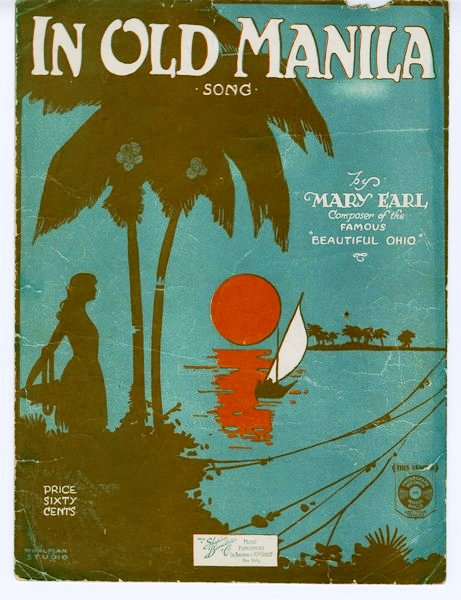
c.1920
Today I am typing on a new keyboard.
This one has larger keys, and is curved slightly. It's very thin!
So, I have found I am making many typing mistakes -
sorry.
I am trying to catch them all.
The reason we are trying out this new computer keyboard
is that it has no numbers on the side, like for a calculator.
Neither of us ever used that feature,
and all the keyboards with that feature are too long
to fit on our computer desk, along with the mouse.
I have to keep my mouse down on the same level as the keyboard.
Any of you with shoulder or neck pain -
try it!
Lower you mouse so your shoulder is not hiked up.
It has helped me tremendously.
Yeah arthritis.
Not.
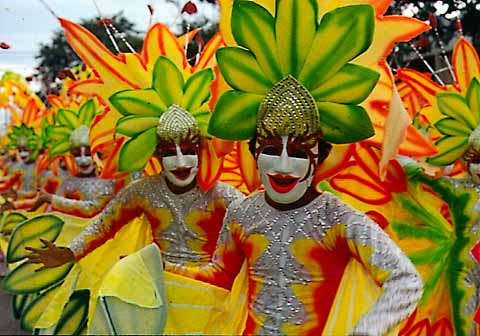
dancers in the Bacolod Masskara Festival
Apparently our internet connection today is extremely
SLOW.
I am not taking 4 - 6 hours to type one blog again.
We can't figure it out if it is yahoo
or blogspot
or the local connection.
WHATEVER it is, it is darn frustrating.
AAAAAHHHHHH........
My apologies for not finishing
The Philippines
yesterday, as promised.
Michael thinks it is our server connection.
and yes...
it's being a big SLOW pain today also.
sigh.
At least I don't have to hand write everything
and illustrate with inks!
:0)

Taal Volcano
Batangas, Philippines
We finished up 2 days ago with just a start about all the volcanoes
in the Philippines.
18, remember?
SIDE NOTE: since the server is so slow, and it takes forever (seems like) to do any changes, like font color or size
I will probably do just black, in the 'normal' setting.
:0(

courtesy http://www.twistynoodle.com/
(funny name!)
The most active volcano is an 8,000 foot peak!

news.bbc.co.uk
Some of the current active volcanoes are
Mount Pinatubo,
Taal Volcano in Btangas,
Hibok-Hibok in Camiguin.
Mount Mayon in Alblay
Jolo
Didicas
Camiguin de Babuyanes
Iraya
Kanlaon
Makaturing.....and more!!

Ash from a 1991 eruption of Mount Pinatubo

Mount Pinatubo's June 12,1991 eruption plume
vuclan.wr.usgs.gov
The Taal volcano in Batangas is one of the most acive in the Phlippines.
It is partially submerged in Taal Lake,
with several centers that lie submerged, bringing more danger to the place.
Taal Crater Lake is high in sulfur content.
Many people swim in it and many divers explore beneath.
Hmmm...
and this volcano will erupt again....
hmmm....

c.1916

Crater Lake, Taal Lake Taal Volcano
In 2009 Mount Mayon erupted, forcing more than 33,000 people to be evacuated.
The last volcano we will talk about is
Mount Hibok-Hibok, in Camiguin.
This hottie erupted in 1827, and then again in 1862.
over 329 people were killed in that one.
Then a 3rd volcanic explosion occured in 1871.
Earthquakes, smoke, ashes, dust, rocks and magma
covered a 3 kilometer area.
The eruption lasted FOR 7 DAYS!!!

running from ash clouds in 2006
news.bbc.co.uk
I bet alot of people thought this was the end of the world.
With all the eruptions, etc. a new volcanic dome was formed,
called 'Vulcan'.

Mount Hibok-Hibok
TRIVIA:
82% if Filipino people are Catholic
(80.9% Roman, 2% Aglipayan)
There are 5% Muslim
2.8% Evangelical
2.3% Iglesia ni Kristo
4.5% other Christian,
then the rest are unspecifiedm according to a 2000 census.
The Philippines is the only Christian country in Asia.

the Philippines flag

vintage Betsy McCall at the Unicef Fair
note the Philippines woman at the top
I found some international flag designs for many different countries
to bead as safety pin pins.
No Philippines, so I thought I would try to make my own.
VERY CRUDE DRAWING, but perhaps you can use it:

Remember, you can always refresh your memory on how to safety pin bead
by writing in my search box, at the top of the blog inthe upper left hand corner. Just type in 'Safety pin tutorial' or 'safety pin pattern'.
I found this GREAT web site with the beginnings of an
ABC book in Filipino.
Here are some pages I found.
I think the artwork is terrific, and the idea is great!
A Ba Ka Da
(the traditional Philipipne Alphabet)


That's a great way to learn a new alphabet!
Next up:
The Philippine Eagle
It is officially calssified as 'critically endangered.
There are probably less than 500 alive in the whole world.
Their last remaining place to live is the Mount Apo region.
They have had to retreat their because of humans.
We have cut down the trees (deforestation)
we turned wilderness into farmland
and used harmful chemicals/pesticides
and poached the eagle to it's soon-to-be demise.
Plain language - that means we have killed them all.
How stupid stupid stupid we humans can be.
As if nothing matters except our own little circle.
Well, don't get me started on that subject,
or I will write a book!!!
Yeah, you heard that Michael...

I really don'/t want to bore you with too much Philippines,
so I will try to shorten things up!
There are these fantastic rice terraces -
The Benaue Rice Terraces
described as one of the
Hidden Wonders Of The World
according to http://www.jitourism.com/

The Rice Terraces are over 200 years old, and are a tribute
to the innovative design needed to grow rice on steep hills.

I know I haven't said much about the history of The Philippines.
And you know I find history fascinating...
but I will try to be brief!!
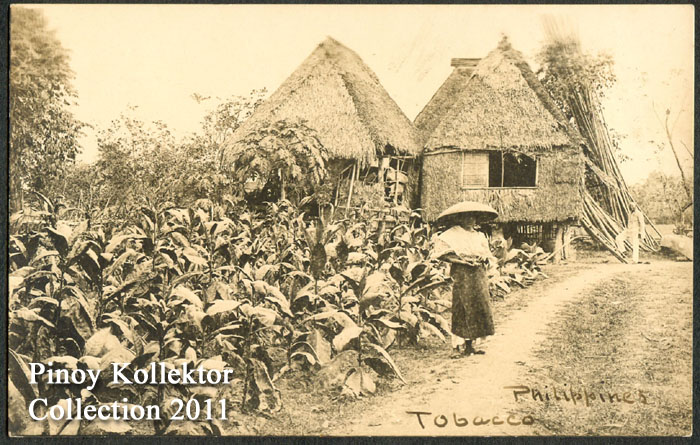
vintage photo of a Tobacco Plantation
Most of the informatioin about the Tobacco Industry in the Philippines is courtesy Pinoy Kollektor, 2011.
Pinoy Kollektor is a collector of cigar and tobacco ephemera.
Good word to know - it means 'paper stuff'.
I also found a fine article written by Dan Mickelson.
The vintage photos are all from Pinoy Kollector Collections.

Ilicano women smoking
In all these vintage photos,
the cigars are size HUMONGOUS!!!

labeled as "Smoking Loloa"
As in many Spanish Colonies of the 16th - 19th centuries,
tobacco was introduced in the Philippines from the New World early on.
It was Magellan in fact who first brought tobacco to the islands,
while exploring the Caribbean.

'Spud Murphy'
The Filipinos made it a success, and the tobacco cultivation business
is one of the Philippines oldest, continuous industries.

vintage Filipino cigar factories
The tobacco leaf quickly became the best thing since sliced bread
(as my Grandma McDowell used to say).
The local people really liked cigar smoking,
which gave the Spaniards entrance into many places that they would normally be persona non gratis .
That means 'get out of here, you!', roughly translated!!!

'Granny enjoying her cigar'
The Spanish were able to gain access to
the largely Islamic island of Mindanao through the tobacco industry.
The leader at the time - Lapu-Lapu - expressed his thoughts about the Spanish on his island by removing the famous explorer Magellan's head.
Not a friendly type action.
But tobacco was the 'in'.
Like in other Spanish colonies, tobacco knowledge and skill
passed easily through the Philippines by interntaional trade routes.

TRIVIA:
The Philippines were actually named after the Spanish king of the time
King Philip

The Chocolate Hills of the Philippines
Some more quick history:
We already know the Philippine Islands became a Spanish colony in the 16th century. In the late 1700's a booming business became severely restricted by the Spanish Crown.
The near demise of the tobacco industry is blamed actually on two families:
the Hapsburgs and the Bourbons, both ruling families in Spain.
Makes me think of Romeo and Juliet bit!
The 2 ruling families made a monopoly on the tobacco business.
This monopoly (because of taxes, strict rules, etc.)
made the Filipinos really mad.
Everyone had become 'addicted' to cigars in one way or another,
and now the demand from Europe was so great for high-quality cigars that they became too expensive for the locals.
In some places, cigars were used in place of currency!
Smuggling became commonplace.
Even the Catholic Church stepped into the fray,
and tried to exert influence and obediance on the natives
to respect the Spanish Crown.
This did not go over well with the nicotine starved populace.

a bead patter of hibiscus, a tropical flower to make as an amulet
A new Spanish company entered into the tobacco business the same year that the Hapsburg/Bourbon monopoly was officially abolished
1881.
La Compania General de Tobaccos de Filipinas opened its' first factory
and is still the leader of cigar production on the Philippines.
Spain held sway, perhaps even after it was a sound financial enterprise,
until after the Spanish/American War of 1898.

c.1898
In 1898 The Philippines was ceded to the USA.

C.1895
In 1935 the Philippines became a self-governing commonweath,
with Manuel Quexon elected president.
He had the task of preparing his country for independence
after a 10-year transition.
In 1942 the islands fell under Japanese Occupation,
during World War II.
The USA forces and the the Filipinoes fought together during 1944- 1945
to regain control. On July 4, 1946
The Republic of the Philippines attained its' independence.

Filipino kids
A 20-year rule by Ferdinand Marcos ended in 1986,
when a 'People Power" movement in Manila forced him and his wife Imelda
into exhile. They installed Corazon Aquino as president.
Yes, that is the Imelda Marcos famous for her shoe collection.

from 1000 B.C Photo, found at http://www.missosology.info.com/
In 1992 the United States closed its' last military base on the islands.
Benizno Aquino III was elected to a 6-year term as president in 2010.
The Philippine government faces threats from several groups.
Manila has waged a decades-long struggle against ethnic Moro rebels in the southern islands. This has let to peace talks - on/again and off/again.
These peace talks also include the Moro Islamic Libertions Front.
The Maoist-inspired New People's Army based through much of the country,
a growing Islam population in the island of Mindinao, and increased tension with China over disputed territorial claims in the South China Sea continue to add to the unsettlement of the nation.
It continues its' struggle to cross the threshold between 3rd world
and 1st world.

President Benigno C. Aquino III, http://www.noypi.ph/
All in all, the Philippines is rich in native culture,
Spanish colonial culture,volcano sight seeing, a variety of landscapes including beaches, mountains, volcanic lakes and superb scuba diving.

Manila Ocean Park, the Philippines
photo cred: Pat Roque http://www.yahoonews.com/ June, 2012
The Philippines is the third largest English speaking country,
after the United States and the United Kingdom.

fishing boats, http://www.thewindsweptsky.com/
TRIVIA:
after the United States,
the Philippines is the country with the most Boy Scouts!
With that, I will close this little bio about
the Philippines.
I would love to visit there some day!
but maybe not to swim in an active volcano's lake.....
:0)
inkspired
www.inkspired.etsy.com


