Showing posts with label UNESCO. Show all posts

Monday, June 10, 2024

Where is Latvia?

 sveiti

(Hello in Latvian)

Today let’s travel to Latvia.

Why Latvia?

Because I have readers that live there and I knew nothing about the country! And because I love to learn about different people and their customs, from all over the world.

 Venta Rapid waterfall, Latvia

Latvia has a long recorded history. It is a European country that sits among Belarus, Estonia, Lithuania, the Baltic Sea and Russia.

Its land size is about the size of West Virginia (small!).

Dreamstime stock photo

Latvia has been under the rule of Germany, Poland, Sweden, Russia and U.S.S.R.  What started as a group of Eastern Baltic tribes merging in 812 AD, Latvia didn’t regain independence until 1991. Russian troops were still stationed there until 1994.

Castle of the Livonian Order, 

It is a parliamentary republic. 

Freedom Monument, Riga, Latvia

Riga is the capitol, and probably the most popular tourist attraction in the country. 

Riga, Latvia

Latvia has 3 UNESCO World Heritage Site designations, the first being Old Town or Historic Center of Riga.

Riga; Lasma Plone, Travel Blogger

Riga was founded in 1201.

From the 12th t0 15th centuries it was a key center for trading and cultural routes between the West and the East.

Orthodox Church, Riga, Latvia

In the 17th century Riga became the largest provincial town of Sweden.  Wooden buildings were built in a neo-classical style, creating suburbs surrounding the medieval city.

Ruhnu Church built in 1644

In the 19th century suburbs were laid out, surrounding the wooden buildings of the 17th century, which surround the medieval part of town. Art Nouveau was all the rage. Riga became a showcase of Art Nouveau architecture, with 50 high value architectures around the medieval part, and 300 scattered further out still standing today!

Lasma Plone Travel Blogger

The Vintage News

A second World Heritage Site is found in the western part of Latvia - Old Town Kuldiga. It started as a small medieval hamlet, and by the 16th century had grown to be a major administrative center. It still retains most of its’ original layout, including the log architecture and foreign influenced styles of the day, through the 18th century.

Papes National Park, Latvia

The 3rd World Heritage Site is part of 

The Struve Geodetic Arc.

Monument to the Struve Geodetic Arc

This is a chain of survey triangulations that run from Hammerfest, Norway to the Black Sea; through 10 countries and is 2,820 km long.

Say what?

It was the first accurate measurement of a meridian.

A mer-what?

Let’s put it this way. No one really knew how big Planet Earth was, and by doing this Arc, it was a first step in finding that out! Another amazing part - astronomer Friedrich Georg Wilhelm Struve made these calculations from 1816 - 1855! Think about it. He spent 40 years with no visible income to establish a mathematical equation that no one could see!

An amazing historical fact is there were a minimum of 10 different regents/kings/bigwigs who had to get along, agree, and approve this.

Map of Struve Geodetic Arc

And now for something completely different:

The state bird is the White Wagtail.


Here’s a coloring page for you.

ViviaiArt

The national flower is the Oxeye Daisy.


Let’s color a few!


Perhaps you’d like to draw your own bouquet -
Rockpainting101

Vector by Freepik

This is the Latvian flag:


Here are a few words you can learn in Latvian:


Latvia is known for their national dance.
These next photos were taken at Dance Festivals.

Dance Festival, Wojtek

Latvian Dance Festival

Latvia has natural resources of peat, limestone, timber and amber to name a few.
Here are some examples of Latvian amber:

VisitLatvia

Julliie Chaya Holder-Goldberger

Latvia exports things like lumber, wheat, broadcasting equipment & hard liquor.
Latvia has 99.9 % literacy rate, with 91% internet users, along with 22.5% live below the poverty level!

Weaving wreaths for Midsummer Festival

Just over 36% in Latvia say they are of the Lutheran religion. 19.5% are Catholic.
20.7% are other Christians.

Church in Cesis, Latvia

In addition to the places I have mentioned Latvia is also known for medieval castles, seaside resorts, palace museums, the widest waterfall in Europe, symbolic embroidery patterns centuries old, and gothic cathedrals.
Too much to squish into one blog, and that’s a lot for a tiny country!
Wordpress.com

Susan E, Pinterest

Pinterest 


After I research a country I always see so many things I want to go and visit!

Latvian countryside; photo credit: Peter Fenda

Rundale Palace and museum
Nickname “The Baltic Versailles”

Well, my Latvian readers, I have described your beautiful country as best I can in a short space. I hope you approve.

‘Til next time,
inkspired

A few websites I visited for info:
bmandarins.com>blog
european-union.europa.eu
Latvia.eu
Wikipedia
CIA.gov
Travelawaits.com
bittersouthern.com
LibraryofCongress.gov

Kaleidoscope by inkspired


Sunday, July 16, 2023

Luxembourg


Vianden Castle
Photo credit: April Everyday

Today we are taking a trip 

to the small country of

Luxembourg

CountryReports.org

 Look carefully!

It’s only 998 square miles large.

Tucked in amongst the 75 castles and fortifications

you can find about 640,000 citizens.

Traditional Luxembourg costumes

Luxembourg is completely land locked.

France, Belgium and Germany share borders with it.

It is a mostly rural country, with dense Ardennes forests in the North, rocky gorges in the East.

The capitol, Luxembourg City is famous for its fortified medieval old town perched on sheer cliffs.

Luxembourg is the small green area in the middle of France, Belgium and Germany.

Why is Luxembourg a country?

It’s so small, wouldn’t it be easier to just be absorbed into one of its much larger neighbors?

To answer that we need to look at a bit of history.

Schiessentumpel Waterfall, Mullerthal Region
Photo credit: Jordan Hanson

As an individual entity, or country, Luxembourg started with the construction of  Luxembourg Castle,  approximately 960 CE (AD) on the site (supposedly) of a Roman fortified fort. Siegfried I, Count of Ardennes started the construction.

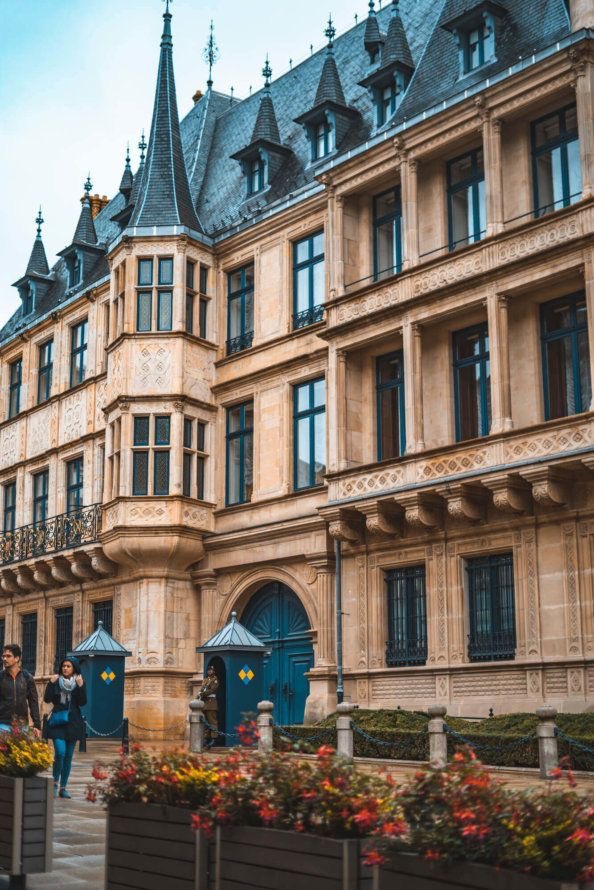
Luxembourg City, Luxembourg 
Photo credit: Peter Gutierrez 


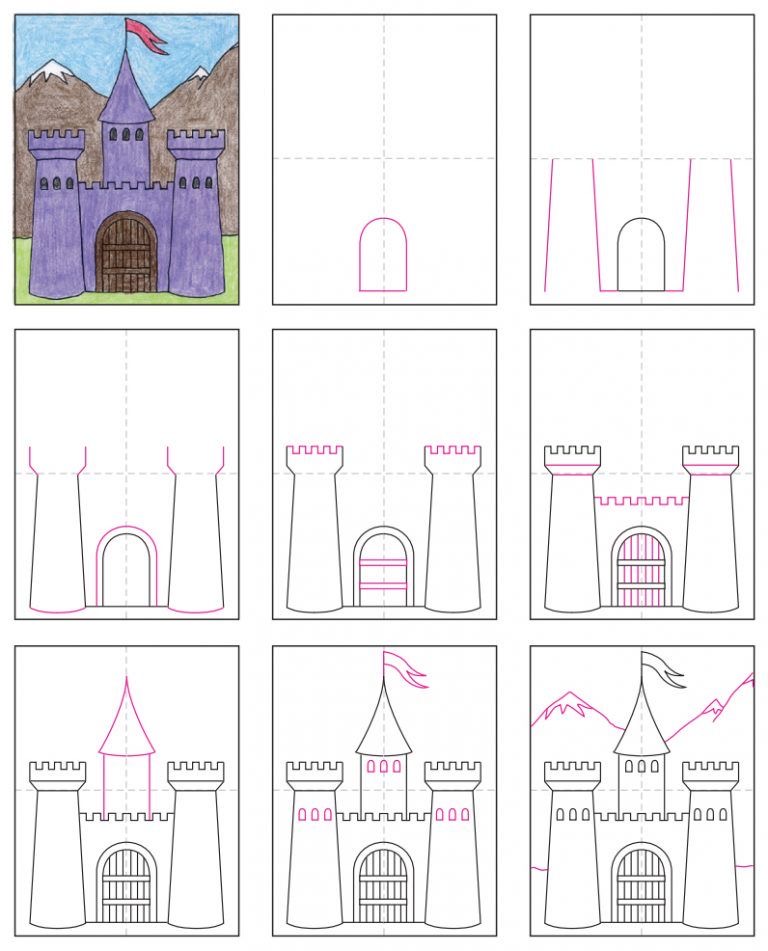
Let’s draw a castle!


Downloaded to Pinterest by Sharon Gowryluk


Luxembourg was passed down from family to family for a few centuries -
House of Luxembourg, the Burgundians,
the Hapsburgs.
There was an 80 Years’ War that resulted in Luxembourg becoming part of the Netherlands,
then it was passed to the Austrian Hapsburgs. When France had their big Revolution it became part of ‘Revolutionary France’. 
Whew! 

Clervaux Castle, photo credit Joan Bos 

In 1815 the Vienna Congress turned Luxembourg into a Grand Duchy in Union with the Netherlands.
Treaties had already reduced the size of the country, 
and in 1837 it was reduced again.
In exchange for giving up land, each time Luxembourg gained more independence.

Vianden, Luxembourg 
Photo credit Ipanema Travels

Luxembourg became independent in 1867
with an agreement of perpetual neutrality by the European Powers.

From 1841-1891 1 in 5 inhabitants emigrated to the USA due to economic problems and loss of markets,
mostly agrarian (think fields and crops).

After the  German occupation from 1914-1918, and again from 1940-1944, with the help of Allied troops
Luxembourg was independent once again.
Quite the history of struggles to get there.
But were their tough times over?

In 1839 Luxembourg had lost more than 1/2 of its land to Belgium in exchange for more independence.
By 1891 they had lost 1/5th of their people.

Castle Beaufort

Throughout all this time, the Luxembourgians kept their national pride and identity as a unique nation.

“We will remain what we are”
is the official motto for Luxembourg.


Traditional Luxembourg dress

With a lot of hard work and wise economic decisions with leadership that was for the people, today Luxembourg has one of the highest GDP per capita and is the top richest country of the world…
…and it is all squished into a land space of about 1/2 the size of the USA’s state of Delaware!

In 1948 Luxembourg lost its’ classification as a neutral country when it joined NATO.

Mullerthal Region, Luxembourg 

So how did it become the richest country 
in the world?
Luxembourg City 

Luxembourg is one of Europe’s wealthiest nations with cultural diversity, highly tolerant citizens, beautiful ancient architecture and a major center for private banking.
It’s the last part that gives the country wealth.
Their main trading partners are Germany, France and Belgium.

Bock Casements
Underneath Luxembourg City

A tiny bit of economics:

First, you have to understand I have a B.S. in Psychology, emphasis on Child Development, Special Education.                      
Minor in Theater.
Not Economics.
No where near Economics!
So this next part is like speaking a foreign language from a tiny tribe in the Amazon for me.
Let’s jump in!

When rating the richest countries, there is a system used called
Purchasing Power Parity.

Clervaux Castle, Luxembourg, World UNESCO site

According to the PPP Luxembourg is no.1 rated as 131,500.

Singapore comes in 2nd at 116,500,

followed by (in order) Ireland, Qatar, Bermuda, Norway, United Arab Emirates, Switzerland, Cayman Islands, Macao and 11th place is USA.

(Most recent info 2021)

Beaufort Castle; Photo credit: smiclux

Luxembourg generates $$ from financial products.

Many of the top PPP countries are tax havens and provide safe and tax efficient homes for large corporations such as Amazon, Google and Apple.

Interesting way to make money.

Traditional Luxembourg folk costumes

Enough facts for a bit!

Let’s learn how to draw a few more castles!


and 1 more -

Art Projects for Kids

Next I have a Color by Number project for you -
By Printablee

Luxembourg is a UNESCO 
World Heritage site -
the City of Luxembourg, the Old Quarter and the fortifications.

Another view of Vianden Castle

It is also on The Representative List of
Intangible Cultural Heritage of Humanity !

This is for 
1. The musical art of horn players.
A teaching technique using singing, breath control, vibrato, resonance of place and conviviality.
Unknown


Horn practice in the park

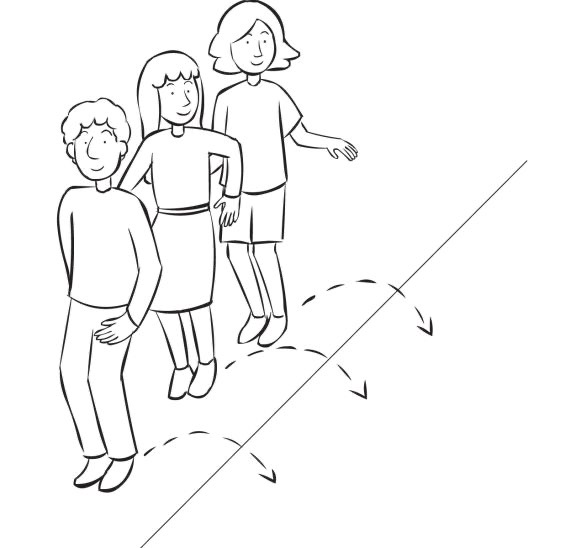
2. Hopping procession of Echternach
(Oldest City in Luxembourg)
Documented since 100 AD it is founded on the cult of Saint Willibrord, the founding monk from the Abbey of Echternach. 
He was known for kindness, gift of curing certain illnesses and his missionary activities.
Pagan elements in the procession caused the Church to ban it - but it kept spreading to the other regions and every social class.


The procession starts with singers reciting litanies until 
8,000 dancers take over!
These are split into 45 groups by rituals that have been
passed down from generation to generation.
It ends with a service in the basilica.
There are an average of 13,000 participants
from Luxembourg and its’ neighbors.

Posted on Pinterest by Roxanne White

As always, when I research for a blog I come up with tons more info than I can put into 1 blog.
Every now and then I will write a ‘part 2’.

I hope you had fun and found out some interesting things about the small country of Luxembourg that you didn’t know before.
As for me,
I would love to visit this unique country,
and perhaps even meet a reader or 2 of my blog!

I’ll put it on my list.

That’s it for today,
‘Til next time,
inkspired

A few of the places I gathered information from,
in no particular order:
architecturaldigest.com
folkcostume.blogspot.com
worlddata.info
usnews.com
Pinterest
nomadsunveiled.com
oecdbetterlifeindex.org
Wikipedia.org
cia.gov
express.co.uk
Conde’ Nast Traveller magazine
state.gov
unesco.org
interpol.int
Abmc.gov

Easy Dots 14