Showing posts with label American history. Show all posts

Friday, January 23, 2026

Real stories Real heroes


Christopher Reeves as ‘Superman’

 I like stories about real people. Maybe not the ‘famous’ people as much as just people like you and me.  

I like stories about regular folks who have discovered something new or different that makes life easier for others. George Washington Carver was born a slave in the US South, yet he educated himself and ended up teaching poverty-stricken sharecroppers how to rotate crops and over 300 new inventions for the lowly peanut. Wow.

George Washington Carver

Then I like hero stories. Average, nothing-special people who have responded to an extraordinary circumstance in a way that is above and beyond our everyday life. Dick and Judy Hoyt come to mind. They never gave up on their severely disabled son, Rick. Because of this Rick was able to communicate, graduate from college and participate in over 1,130 endurance events (think marathons and triathlons) thus inspiring millions of people. He raised the bar of expectations for millions of severely handicapped individuals and their caretakers. Impressive.

Team Hoyt in marathon

I also love stories about animals. Now, I can’t watch movies where an animal dies, especially at the end. Oh my, way too emotional for me! I also cannot stand stories where an animal goes through abuse, even if in the end they find a wonderful home environment. Black Beauty? I made the mistake of reading that because it is a classic. Never again. And don’t even talk to me about Old Yeller

Black Beauty by Anna Sewell

Animals can be heroes too. I am in awe of Binti Juwa, an 8 year old Western Lowland gorilla who rescued a young boy that fell into her enclosure at a Chicago area zoo. Not only did she protect him from other gorillas, but she safely carried him to the door for her keepers to care for him. Another wow. 

Western Lowland Female gorilla

Do you know an ‘ordinary’ hero? I’m willing to bet you do. Heroes come in all sizes, shapes, ages and colors. Most of them do not wear capes (tights are optional). Generally heroes do not think of themselves as heroes. A classic answer from them is “I just did what needed to be done. I didn’t think about it.” Perhaps that is a key to what forms a real hero. They don’t think about being famous or getting a lot of money or recognition. Many of them shy away from any public accolade. 

Bondi Beach, Australia

Ahmed al Ahmed was at a beach in Australia on Dec 16, 2025. He owns a fruit shop, and has 2 kids. Pretty average. Only on this day he saw a gunman shooting people - 15 of them died. Dozens were injured. Think about that. A shop keeper. A dad. A gunman actively shooting a gun at people. First inclination? Run away! Hide! But not Ahmed. He jumps the guy, wrestles with him and takes the gun away. Oh, AND he gets shot twice in the process. He did not stop to think of consequences. He did not weigh the pros and cons of approaching a man shooting a gun. He just reacted.

Ahmed al Ahmed wrestling gun away from shooter

He just ‘did what had to be done’.
Why?

I think heroes and yet-to-become heroes have some  basic things in common. They know right from wrong. Hurting other people or animals is wrong. Helping others is right. It seems today so many people step on others so they can climb higher. A little backstabbing? Well, that’s okay if it helps me. A small insider trading tip? That’s not going to break or make a company, it’s just a little thing that puts a little extra $$ in my pocket. No one gets hurt - not really. Besides, if you were smart enough you would do the same thing. Right or wrong can vary with the situation, right? I mean, everyone’s doing it.

I repeat, heroes know right from wrong.
Good from bad.

Found on Pinterest

Now, there’s knowing something, and then there’s the doing. I may know that kicking a dog is wrong. It is a bad thing to do. However if I see that abuse, and just walk away, I am participating in that abuse. I am agreeing with the bad by doing nothing to stop it. If I truly believe that kicking an animal is wrong, then I will not allow it to happen without intervening. I think so many people get this part wrong.
 “It’s not my problem.” 
It’s none of my business.” 
That’s someone else’s job to take care of.
 “Why try? I’d just get in trouble.”
What difference can one person make?

Nicholas Winton

A hero sees a wrong, and acts.

Nicholas Winton was a British stockbroker working in Czechoslovakia in 1939. He saw the Nazi party rise to power. He saw the train cars jammed with ‘undesirable’ people - Jews, gypsies, priests & nuns - anyone who the Nazi party determined to be less than perfect for their New Society Order. He was just an ordinary man who knew right from wrong, and what he saw he knew was wrong. What could one man do? It would be dangerous to himself. The Nazis did not take lightly anyone who opposed their ideologies and practices. But Nicholas Winton was a hero in disguise. So he did something.


 By the end of the war, he had rescued 669 children; sending them to safety and life. The war ended. He married and started a new life. He never said anything about the children or his part in the rescues. One day his wife found some old scrapbooks of his - and in them he had detailed everything he had done along with name after name of children he had saved. The world was about to hear about a true hero. A simple man who knew right from wrong, and could not sit back and watch evil win against good. So he acted.

Nicholas Winton surrounded by some of the now grown up 669 children he saved from death camps.

Heroes also value life. In today’s world too many people are ‘throw-away’ people. A human life is a thing to be wasted if it is in your way to success. Our life becomes more valuable than anyone else’s. Those starving children in Haiti? That’s really sad, but doesn’t have anything to do with me. I’m never going to meet one. And I need every penny I make to love the life I want.
But heroes know that every life has worth.
Even if that means they lose their own life.

Dave Sanders

Dave Sanders was a teacher at Columbine High School, Colorado, USA. He was a father and a grandfather. When he heard gunshots he didn’t hesitate, he started directing students and employees to safe exits. Then he went out into the hallway to warn more people, where he encountered 2 gunmen. He was shot and they moved on. He managed to climb up to the 2nd floor and helped students barricade themselves inside a classroom, the entire time bleeding from his wounds. The students did what they could, but Mr. Sanders eventually bled to death while waiting for help to come. It is estimated that he saved the lives of over 100 people by directing them to safety.
Mr. Sanders thought the lives of others had value, even at the expense of his own.


Let’s look at that again. Dave Sanders heard gunshots. He knew what they were, and he immediately, without hesitation, began directing students and others to safety. He did not follow them. Instead he went in the direction of the gunshots. He went towards danger, not away from it. Why? To warn other people. To try and keep safe other children, not himself. Even after being mortally wounded, he still thought of others. He still moved forward to try and save more lives.
That’s what heroes do. They value all life, not just their own, even to the point of losing their own life.
More than awesome.


Heroes are not fearless. They do not necessarily have a huge amount of courage. Some of them are not really very nice people, overall. But in a moment of crisis their better self shows through. When they look beyond past life choices and expectations, they may do an heroic action. Will they miraculously become a perfect person and live a good life from then on? Maybe not. If you look closely, many heroes have smudges and stains and do not wear halos. Heroes are not perfect. They get scared. They may hesitate before acting. 
But the point is, in the end they make the right choice. They do ‘what needs to be done’ in a time of crisis.


One more story, about two heroes.
 Valley Springs Manor for elderly and mentally ill patients is a facility in California.
2013
The owners abruptly close, and stop paying the employees. Logically, everyone leaves.
Leaves 16 round-the-clock care patients that is.
Except Maurice Rowland, a cook
and Miguel Alvarez, a janitor.

I couldn’t live with myself if I had just left them alone.

These two men cared for 16 elderly and dependent people for 2 days. They administered medicine, provided food and basic care. Just the 2 of them, with no expectation of getting paid or reimbursed. For over 48 hours with no outside help, and very little sleep.
That’s a hero.
Actually, that’s two heroes.

Maurice Rowland and Miguel Alvarez

Because of their selfless act, a state law has been passed to protect the fragile and helpless from elder abuse such as these 16 people experienced.
Basically, these 2 men saved their lives.

(The rest of the story: the fire department and local sheriff stepped in and took over after 2 days. The owners were charged with elder abuse.)

I hope I have encouraged you to think about the heroes that have touched your life. Perhaps it’s time to let someone know that they are a hero.

‘Til next time,
inkspired

A few websites I looked at while researching this blog, in no particular order:
Pinterest
TeamHoyt.com
Wikipedia
npr.org
History.com
storycorps.org
Sciencehistory.org


Saturday, November 22, 2025

The Pawnee of North America


Nawah

(Friendly greeting in Pawnee)

The Native American tribe of the Pawnee (Chatiks si chatiks- literally ‘Men of men’)

was originally from the Great Plains area of what is now Nebraska and Kansas, United States of America, North America.

It is now called 

Pawnee Nation of Oklahoma.

Pawnee man, probably circa 1868

The Pawnee were once one of the largest tribes of North America. Archaeological sites date them to about 1250 CE; living in the same area for almost 700 years.


Pawnee women 1868 photo cred: William Henry Jackson

To put that in perspective, The Crusades
were winding down in Europe. A new middle class of merchants and shopkeepers was developing between the nobles and the serfs. England’s Hundred Years’ War was starting. The Holy Roman Empire was rapidly falling into chaos and infighting after a period of political power.

Dramatization of The Crusaders’ war

Across the world, the Pawnee lived in packed earth lodges, settling close to rivers. The door always faced East towards the rising sun. Each lodge housed 30-50 people, all related families of 10-15 households. A settlement might have 300-500 people living in it. 


When a young man married, he went to live with his wife’s family. They were considered a matriarchal society, meaning they followed the mother’s bloodline (in the US traditionally we follow the father’s bloodline).

Pawnee family 

Pawnee man

A Pawnee man would shave his head, leaving what is called a scalp lock - a strip of long hair along the very top of the head, from forehead to back of the head. This was often adorned with a porcupine decoration on top, called a roach.

Pawnee man, 1868

Lewis and Clark, on their expedition of 1804, recorded meeting Pawnee along the way.

William Fulton Soare (1896-1940)
Cover Art for BOYS’ Life Magazine, Sept 1934

The early 18th century saw Pawnee populations around 60,000.
Then other tribes began to move into their territory. The Dakota, Lakota, Cheyenne and Arapaho tribes started pushing the Pawnee around.
White Eurasians were ever expanding their explorations and settlements. With them came infectious diseases the Pawnee had never been exposed to, such as small pox, measles and cholera. Between those two events the Pawnee numbered 4,000 in 1860.
By 1873 there were only 2,400 left.
Ruling His Son, Pawnee Indian Scout, died 1928 at 102 years old.

The US government forced the Pawnee off their tribal lands and relocated them to poor areas of Oklahoma. Many warriors enlisted with the US army as Indian scouts to help track their traditional enemies - the Lakota, Dakota and Cheyenne. They also had frequently fought with the Apache, Kiowa and Sioux.

Pawnee scouts

When the re-location happened no consideration was given to these Indian scouts and they were forced to move to Oklahoma also.

As-Sau-Taw-Ka (White Horse), scout, 1868

Later several Pawnee men joined Buffalo Bill’s Wild West show.


Pawnee men with Buffalo Bill

The Pawnee were both farmers and hunters. They excelled at farming crops of corn, beans and squash. The women were in charge of the crops, dividing resources and trade, and inter-lodge social matters. The older women looked after the children. 
Prairie Chicken aka Ta Tow Ou do Sa; 1868

The men were hunters, and made war decisions, along with health and spiritual decisions.

Knife Chief, Pawnee Chief and Buffalo Bill’s Wild West show actor

Pawnees were considered spiritual, and put great emphasis on their sacred bundles. These bundles were considered a source of power and good fortune, and were passed down as an inheritance from father to son through generations. A sacred bundle might contain things like feathers, stones, animal hides or a sacred ear of corn. Each item had a spiritual and symbolic meaning. The great bundles were considered ‘alive’ with supernatural powers. Thus, they were not to be seen or used other than certain ceremonies. However an individual could have a lesser bundle of more personal sacred items that he would carry with him.

World History Encyclopedia 


The Pawnees were divided into two groups - the Skidi/Skiri Federation and the South Bands. The Skidi had the larger population, but the South Bands were the political leaders. 

Skidi Pawnee Dog Chief, son of Crooked Hand; US scout 1868-1876; Smithsonian

There was one Skidi village that practiced human sacrifice occasionally in a reenactment of the creation of the Pawnee people, and giving fertility to the land. A young girl would be kidnapped from a neighboring enemy tribe and sacrificed with her blood being an offering to the land for continued life on the plains - both crops and buffalo. This was an extreme version of the Pawnee cosmic beliefs in the Morning Star and the Evening Star, made by the creator deity Tirawa. The last known sacrifice was in 1838. 

Man Chief aka Chief Petalashara 1858-1859

Chief Petalashara was instrumental in helping to abolish this practice, along with pressure from missionaries, settlers, and a growing discontent with the current affairs of the tribe and old spiritual practices.


A yearly event for the Pawnee was Buffalo hunting. After Europeans brought horses to the Americas in the 1700s the tribes were able to greatly expand their hunting territories. In summer/winter hunting seasons they might travel as much as 500 miles per season. 
Part of their travel included dogs pulling travois.
Dog travois, unknown Plains tribe

A travois is a kind of sled, with 2 long poles and a sling in between. Both dogs and horses were used to pull the travois.

Dog travois

promotional card from the National Biscuit Company, 1949-1952


The Pawnee were known for their artistry in pottery making, basketry and hide paintings. Traditionally the artists were men. The hide paintings depicted scenes of daily life and war wins; and commonly buffalo and elk.
Donaldellisgallery.com


Pawnee pottery; All Things Native American; Pinterest 

Shawnee pottery; History.Nebraska.gov

Where are the Pawnee today? There are about 3,200 registered Pawnee (2020 census) with a minimum of 1/8th pure Pawnee blood required. Nearly all of them live in Oklahoma still today, after being forcibly moved there in 1876. Most live in or around the city of Pawnee, OK, where the tribal headquarters are located.
Here are a couple of jointed puppets you can print, color and cut out, then assemble. What would make them look more authentic?


Found on Pinterest

The Pawnee Nation of Oklahoma owns tribal lands, gas stations, a truck stop, 2 casinos, smoke shops and various other businesses. These bring in revenue to support programs such as education, welfare and a new Behavioral Health Center.


From being one of the largest North American tribes, to being nearly wiped out; from thriving villages to poor living conditions far from their tribal lands; from  the children being prevented from speaking their own language and moved to Indian ‘schools’ far from home - the Pawnee Nation has proved to be resilient, courageous, and resourceful.
I have enjoyed learning about them. I hope you have too!
‘Til next time,
Inkspired

A few sites I visited to research this blog,
in no particular order:

Indians.org
Castle.eu.edu
Wikipedia.org
welcomenativespirit.com
Pawneenation.org
BigOrrin.org
Worldhistory.org
Pinterest 


Sunday, June 22, 2025

1920s Flapper Fun

Welcome! 

1920’s ‘flapper’

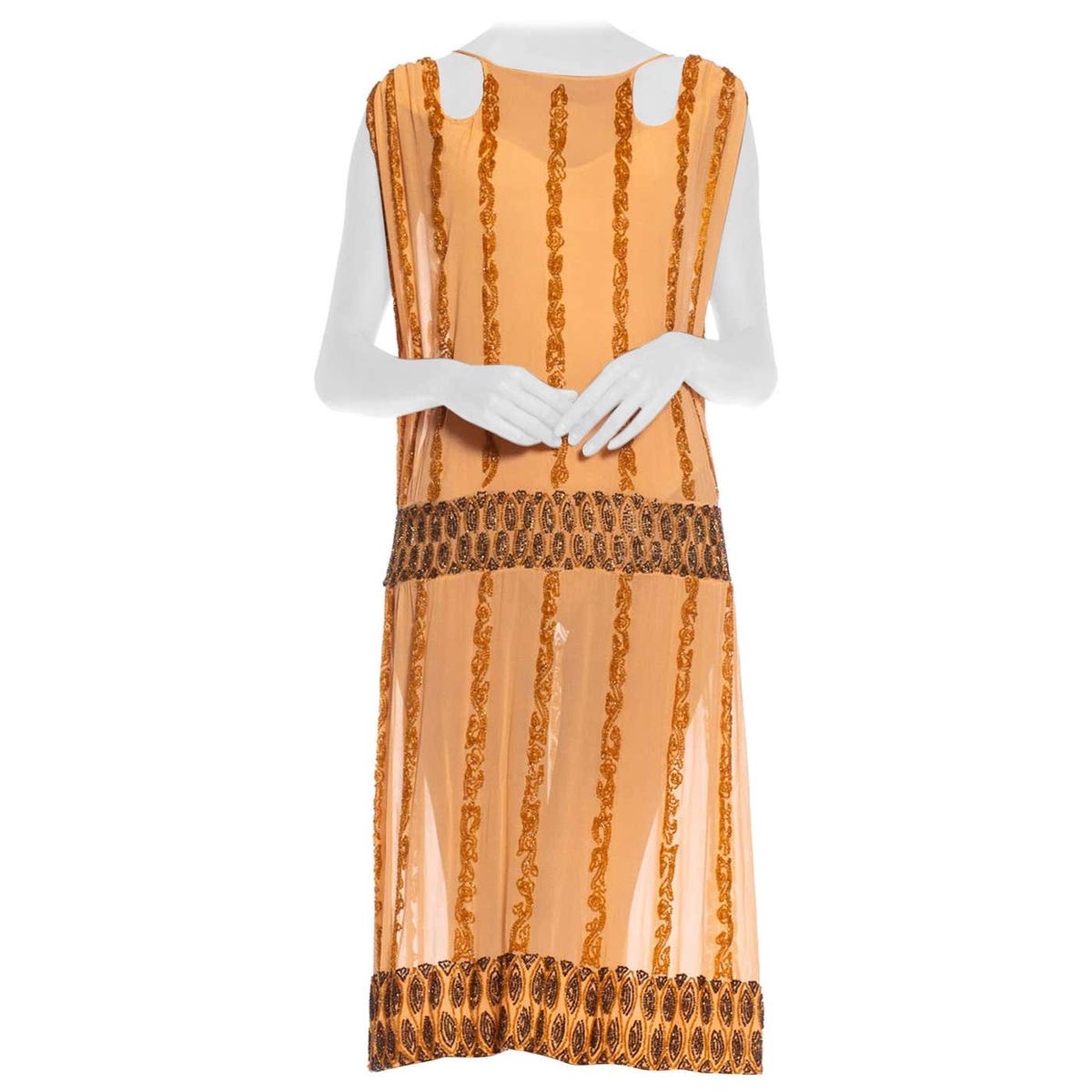
I was researching to do a blog on beaded dresses of the 1920’s. I think they are so beautiful and as a beader myself I really appreciate the effort and talent that went in to making each one.

1925 evening dress, Sartorial Ventura (Rome?)

Well, you can’t research the 1920’s without getting slapped in the face with flappers.
I thought I knew about flappers. They were called that because they wore galoshes left unbuckled and they flapped when they walked.
Well…
not really.

1920’s Louise Brooks

Okay, but all the women bobbed their hair short and wore straight no-curves dresses mid calf, right?
Ummmm,
Nope!


Actually, no one is exactly sure where the term ‘flapper’ started, but it has morphed it’s meaning quite a bit through the years.

Photograph from 1920’s

Generally a flapper was a young woman around 16 years old who was rejecting the tight restrictions of the current society. During and after World War I, America had lost quite a few men in the War. Jobs needed to be filled, and they were - by women.

With a better economic outlook, women started to feel more independent. They were, frankly, tired of bone-crunching corsets, suffocating fashions and all the society rules and regulations.


August 26, 1920
Women earned the right to vote.
The stifling rules were crumbling.

Then The Spanish Flu hit.
An estimated 20-40 million people died.
These were young people. People expected to live long and full lives. The USA was already devastated by the loss of their young men due to war.
As a result attitudes changed and the thought of ‘better enjoy it now while you’re still alive, as you might be gone tomorrow’ was prevalent.

Joan Crawford, 1929

Everyone, especially the younger crowd, wanted freedom! They were going to live life to the fullest, which they interpreted as smoking, dancing, drinking, casual sex, and partying.

And then The Charleston was born. 
  

What a dance!
The Charleston represented everything that the Edwardian Era did not:
Short skirts, bobbed hair, heavy makeup,
smoking cigarettes, alcohol, driving cars - fast! Women were listening to Jazz! They were treating sex casually and they were madly dancing the Charleston in speakeasies and clubs.
  

Paul Poiret gown

Those calf-length skirts hiked up to above the knee (scandalous!). Boned corsets and bras were tossed in favor of a flat female outline. There were even ‘bras’ designed to flatten your breasts!

Les Modes magazine, 1924

1925 Caillot Soeurs

Layers of heavy materials like taffeta and brocades were replaced with thin underslips of silk and overdresses of sheer netting, encrusted with thousands of beads. Feathers and fur added fun embellishments.


Did everyone dress like this?
Of course not. Fashion has always been a sliding scale determined by economics, convenience, availability and morals of the day. Just as most of us don’t buy our clothes from one-of-a-kind designer boutiques, the modern 1920’s woman wore fashion that fit her place, including social status and age, in society.
But times, they were a-changing.


Gone was the below knee hair plaited and piled up on top of the head. Bobbed haircuts proved this woman was in charge of herself. She wanted freedom!
Loose and shorter skirts allowed her to kick up her heels and dance with abandon. Receiving a paycheck meant she had the ability to buy things unavailable or considered frivolous before.

Clara Bow, who had ‘It’


Hollywood embraced the newfound freedoms and their starlets were encouraged to promote this new outlook on life by becoming even more extravagant. Movie moguls prodded their stars to be even more outrageous, fueling the fire of consumerism and luxury. (Are we really surprised here?)

Pola Negri, silent film actress

1920’s French couture, hand beaded

The new jazz

For those in a lower income bracket, there were plenty of patterns to make your own. Women’s magazines were very popular and frequently printed patterns in them. You did have to know how to hand bead however for any comparison!


‘Celery green’ was a fave color.

Louise Brooks in ‘The American Venus’, 1926

Each flapper dress might have thousands of glass beads attached. This added many pounds to the dress, but allowed it to hang properly.
The beads also mimicked precious stones and pearls in the lights of a speakeasy. Bakelite mimicked ivory. Tassels, gold thread and feathers added to the glamour.


The middle class could purchase panels of fabric that were machine beaded in motifs of ancient Egypt, Greece and anything ‘Oriental’. They would then finish the panel into a dress.
Were beads just for the evening?
Nope.
Uncut beads were used in daywear.
Faceted beads were used for evening.

1920’s evening dress

Colleen Moore in “Synthetic Sin’, 1929

The dresses were beaded onto fabrics such as silk, velvet, chiffon and organza. These are fragile by design. Add the weight of 1,000s of glass beads and you have dresses that have not survived in history very well. An intact 1920’s beaded gown will cost thousands of dollars today.
Museums hire specialty curators who spend hundreds of hours repairing a gown to its original beauty.
Bead by bead.

NationalmuseumsScotland.blog.nms.ac.uk

Nicolas Galaxy

The beaded gowns were many times made of a sheer fabric, and meant to be worn over an under slip of neutrally colored silk. The styles relied heavily on the newly popular ancient Egyptian, once the tomb of King Tutankhamen was discovered. Ancient Greek motifs were also popular, along with anything ‘Oriental’ (Asian and Near East).


Esther Ralston 

There was only a small part of the population that flappers consisted of. Yet when we think of 1920’s, we think ‘Flapper’, ‘Beaded gowns’, ‘Bobbed hair’ and beautiful beaded handbags!
(Well, ok at least I do!)
Most could not afford a Hollywood lifestyle of freedoms and luxury items. Much like today economies.

Clara Bow
Cost? $346.50

By 1930 the flapper era was essentially over. It was a fun-filled, brief, flash-in-the-pan time when women explored their new-found freedoms.

Beaded on velvet dress, 1920’s

Loretta Young

I love the legacy they left us of beautiful beaded gowns and stunning handbags (which I will cover in a future blog).
But those headbands with all the beads?
You can keep those for history! 
Leatrice Joy, silent screen actress

I think I will close with a few comparisons of 1920 cost of living to 2025 for fun.
Disclaimers: I am rounding up.
Prices vary across the USA.
Prices vary from quarter to quarter.
Prices vary from town to rural.

1920 new house- $6,297
2025 new house- $503,800

1920 new Chevy car- $525
2025 new Chevy sedan- $30,300

1920 Female hair cut- $5
2025 female hair cut- $76

1920 manicure- .25
2025 manicure- $31

1920 1Lb. Round steak- $3
2025 1 Lb. Rib roast- $18.25

1920 movie ticket- .15
2025 movie ticket- $16.25

1920 electric vacuum cleaner- $39
2025 electric vacuum cleaner- $150

1920 average house income- $3,270
2025 average house income- $67,521

That sure helps me put things in perspective!

Til next time,
inkspired

A few websites I visited for information, but not limited to and not in any order:

en.wikipedia.org
overdressedforlife.com
gbacg.org
royal-needleworking.org.uk
Pinterest
circavintageclothing.com.au
NationalmuseumScotland.blog.nms.ac.uk
en.m.wikipedia.org
History.com
mdhistory.org
Britannica.com
Worldpopulationreview.com